Global web icon
merriam-webster.com
https://www.merriam-webster.com/dictionary/effect
EFFECT Definition & Meaning - Merriam-Webster
The words effect and affect are often confused. The most common use of effect is as a noun referring to a change or result.
Global web icon
vocaberry.com
https://vocaberry.com/grammar/affect-vs-effect/
Affect vs. Effect – What’s the Difference?
Affect and effect are two of the most commonly confused words in English. They sound and look similar, and even relate in meaning — but they have different grammar functions and are used in different ways.
Global web icon
cambridge.org
https://dictionary.cambridge.org/dictionary/englis…
EFFECT | English meaning - Cambridge Dictionary
effect noun (THEATRE, ETC.) effects [ plural ] (also special effects) B1 lighting, sounds, and objects that are specially produced for the stage or a film and are intended to make something that does not exist seem real:
Global web icon
dictionary.com
https://www.dictionary.com/browse/effect
EFFECT Definition & Meaning | Dictionary.com
Effect, consequence (s), result refer to something produced by an action or a cause. An effect is that which is produced, usually more or less immediately and directly: The effect of morphine is to produce sleep.
Global web icon
oxfordlearnersdictionaries.com
https://www.oxfordlearnersdictionaries.com/definit…
effect noun - Definition, pictures, pronunciation and usage notes ...
Definition of effect noun from the Oxford Advanced Learner's Dictionary. [countable, uncountable] a change that somebody/something causes in somebody/something else; a result. What are the long-term effects of this treatment? The results show a statistically significant effect. effect on somebody/something Her tears had no effect on him.
Global web icon
britannica.com
https://www.britannica.com/dictionary/effect
Effect Definition & Meaning | Britannica Dictionary
If something has an effect on something or someone, it changes or influences that thing or person in some way. The new regulations may have an effect on small businesses. It could have effects on other businesses as well. The total effect of the painting was one of gloom. The color gives the effect of being warm.
Global web icon
grammarly.com
https://www.grammarly.com/blog/commonly-confused-w…
Affect” vs. “Effect”: What’s the Difference? | Grammarly
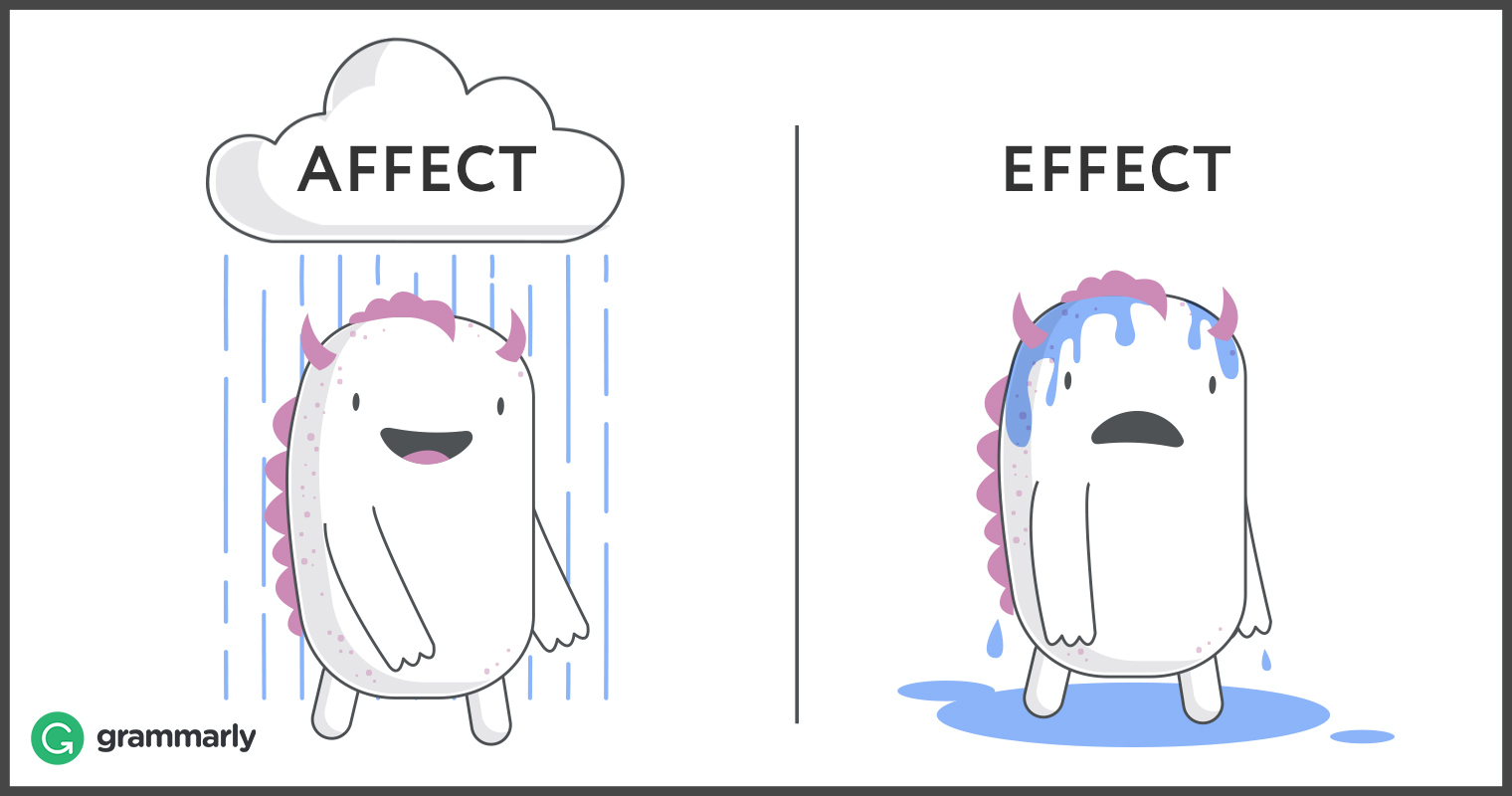
Affect is usually used as a verb meaning to influence or produce a change in something, whereas effect is generally used as a noun that refers to a change resulting from something.

Global web icon
vocabulary.com
https://www.vocabulary.com/dictionary/effect
Effect - Definition, Meaning & Synonyms | Vocabulary.com
Effect appears less often as a verb, but when it does, it means “produce.” Usually, it’s a noun. It can even refer to your belongings, like when you get kicked out and your former roomie begs you to get all of your personal effects.
Global web icon
collinsdictionary.com
https://www.collinsdictionary.com/dictionary/engli…
EFFECT definition and meaning | Collins English Dictionary
A person's effects are the things that they have with them at a particular time, for example when they are arrested or admitted to hospital, or the things that they owned when they died.
Global web icon
merriam-webster.com
https://www.merriam-webster.com/grammar/affect-vs-…
Affect vs. Effect: How to Pick the Right One | Merriam-Webster
Affect and effect are two of the most commonly confused words in English, but don’t worry—we’ll help you keep them straight. The basic difference is this: affect is usually a verb, and effect is usually a noun. Affect, when used as a verb, means "to act on or change someone or something."